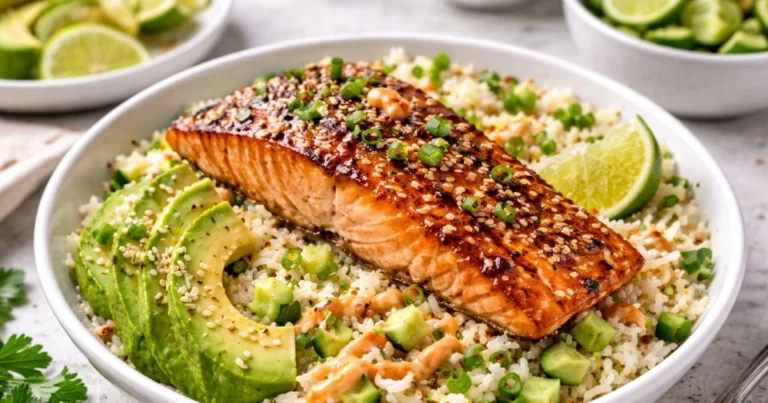
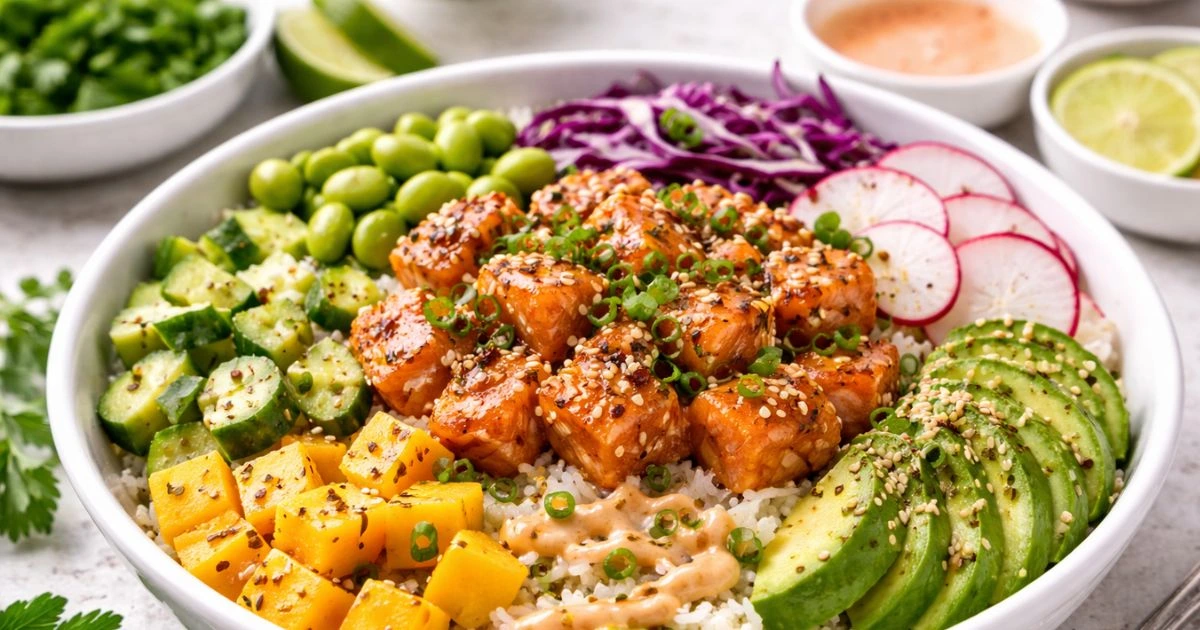
6 Easy & Fresh Salmon Poke Bowl Recipes for a Healthy Meal
Ever had a meal that brings back memories? The bright citrus, the clean salmon, the comfort of a bowl. These salmon poke bowl recipes aim to give you that feeling at home. Whether you’re looking for a quick lunch or a weekend meal prep, we’ve got you covered.
This guide offers 6 fresh salmon poke bowl recipe ideas. They balance taste, health, and speed. You’ll learn about ingredients, preparation, sauces, and safety tips to make a great salmon poke bowl at home.
Expect to use fresh ingredients and quick prep. You can customize toppings for any day. These recipes are perfect for anyone wanting authentic flavors or an easy meal to prep.

Key Takeaways
- Meta title: “6 Fresh Salmon Poke Bowl Recipe Ideas.”
- Meta description: “Dive into flavor with our 6 fresh salmon poke bowl recipe ideas! Explore easy, healthy, and authentic ways to enjoy this delicious dish at home.”
- You’ll learn how to prepare a reliable homemade salmon poke bowl with clear ingredient and safety tips.
- Recipes focus on fresh ingredients, quick prep, and customizable toppings for meal prep and weeknights.
- The article is organized so you can jump to ingredients, step-by-step how-to, sauces, variations, tips, and storage.
Why You’ll Love This Salmon Poke Bowl Recipe
This dish is fresh and flavorful, with easy prep. It’s a healthy salmon poke bowl that’s full of lean protein, omega-3s, and crisp veggies. The mix of textures and colors makes every bite satisfying and pretty.
Fresh and Healthy Ingredients
Poke bowls use raw or lightly marinated fish, like sashimi-grade salmon. They’re paired with fresh veggies like cucumber, edamame, and seaweed salad. Add avocado, scallions, pickled ginger, radish, and microgreens for extra nutrition.
Salmon is rich in omega-3s, which are good for your heart and brain. Using brown rice or mixed greens keeps the dish low in sugar. Always buy sushi-grade salmon from trusted places like Whole Foods or Trader Joe’s.
Perfect for Quick Lunch or Dinner
Most parts of the dish cook up fast. Rice takes about 20 minutes, and a quick marinade is 10–30 minutes. So, you can have a delicious salmon poke bowl in 25–40 minutes.
Rice and marinated salmon keep well in the fridge. This makes it easy to prep meals ahead of time. You can make it for family, serve it to guests, or even turn it into lettuce wraps.
Here’s how to make it even quicker: pre-cook rice and chill it, pre-cut toppings, and store sauces in small containers. These tips help you make a tasty salmon poke bowl in no time.
Ingredients for the Best Salmon Poke Bowl Recipe
Start with high-quality ingredients for the best salmon poke bowl. A few careful choices can make a big difference. You’ll find tips on picking fish, rice, and toppings that balance texture and flavor.
Choosing Sushi-Grade Salmon
“Sushi-grade” means the fish is handled and frozen to kill parasites, as per FDA guidelines. It’s frozen at -4°F (-20°C) for seven or more days, or at -31°F (-35°C) until solid, then stored at that temperature for 15 hours.
Buy from trusted places like Whole Foods seafood counters or local fishmongers. Look for labels that say sashimi- or sushi-grade salmon.
Check the fish visually. Choose fillets that are firm, bright, and have a mild ocean scent. The surface should be moist, not slimy. If raw fish isn’t an option, use quickly seared salmon, poached salmon, or fully cooked smoked salmon to keep the poke-style toppings intact.
Best Rice for Poke Bowls
Short-grain Japanese sushi rice is the classic choice for poke bowls. It has a sticky texture that holds everything together. Medium-grain rice is a good alternative.
For healthier options, try short-grain brown rice, quinoa, cauliflower rice, or a bed of mixed greens for a low-carb choice.
For seasoning, use 3 tablespoons rice vinegar, 1 tablespoon sugar, and 1 teaspoon salt for 3 cups cooked rice. Rinse the rice until the water runs clear. Cook it in a rice cooker or heavy pot. Let it rest covered, then gently fold in the seasoning while it’s slightly warm.
Toppings and Garnishes
Choose toppings for contrast. Classic picks include sliced avocado, cucumber, shredded carrots, edamame, seaweed salad, pickled ginger, scallions, masago or tobiko, sesame seeds, and furikake.
Balance texture and flavor: add crunchy elements like radish or toasted nori strips, creamy elements like avocado or mayo-based sauces, salty/umami notes from soy or pickles, sweet accents like mango, and heat from jalapeño slices or chili crisp.
Watch allergens. Use tamari instead of soy sauce for gluten-free diners. If you avoid shellfish or fish roe, swap in toasted seeds or hemp hearts for a similar crunch and visual pop.
| Ingredient | Why It Works | Quick Tip |
|---|---|---|
| Sushi-grade salmon | Safe to eat raw when handled per FDA freezing guidelines; tender texture | Buy from Whole Foods or a trusted fishmonger; check color and scent |
| Short-grain sushi rice | Sticky, holds sauces and toppings; classic poke base | Rinse until clear; season with rice vinegar, sugar, salt |
| Short-grain brown rice / quinoa | Whole-grain or higher-fiber alternative | Cook slightly longer; mix with white rice for texture balance |
| Avocado, cucumber, edamame | Creamy and crunchy textures that complement raw fish | Add avocado last to avoid browning; chill edamame before serving |
| Pickled ginger, scallions, furikake | Umami and bright aromatics that lift the bowl | Sprinkle furikake at the end for visual appeal |
| Masago / tobiko or toasted seeds | Briny pop from roe; seeds provide a shellfish-free crunch | Use seeds if avoiding shellfish allergens |
| Sauces (soy, tamari, spicy mayo) | Bind flavors and add depth | Offer tamari as a gluten-free option |
How to Make Salmon Poke Bowl Recipe
Plan your prep and timing to keep your bowl fresh and balanced. You’ll need cold, sushi-grade salmon, short-grain rice, and your favorite toppings. Follow a simple workflow: prep the salmon, cook and season the rice, then assemble. This method works whether you’re making an easy lunch or a fancy dish for guests.
Preparing the Salmon
Work with very cold fish and a sharp, clean knife. Remove skin, trim silver skin and any bloodline for a cleaner flavor. Cut the fillet into uniform 1/2- to 3/4-inch cubes for even marinating and presentation.
Make a basic marinade: 3 tbsp soy sauce or tamari, 1 tsp toasted sesame oil, 1 tsp rice vinegar or mirin, 1 tsp honey, 1 tbsp thinly sliced scallions, and 1 tsp grated ginger for about 1 lb of salmon. Toss the cubes gently and marinate 10–30 minutes. Short marination gives a slightly cured texture without breaking the flesh.
If you prefer a warm contrast, sear cubes in a hot pan for 30–60 seconds per side. Cook fully for diners who avoid raw fish. These alternatives make it easy to make salmon poke bowl variations that suit every appetite.
Cooking and Seasoning the Rice
Rinse short-grain sushi rice until the water runs clear. Use a 1:1.1–1.2 rice-to-water ratio; adjust by brand. Cook in a rice cooker or covered pot and let the rice rest 10 minutes off heat to set.
Warm sushi rice seasoning — rice vinegar, sugar, and salt — until dissolved. Fold the seasoning into warm rice using a cutting motion. Fan the rice as you mix to give shine and the right texture.
Plan about 1 to 1 1/2 cups cooked rice per bowl depending on hunger and whether you use rice or greens as the base. Proper portioning helps you balance ingredients for an easy salmon poke bowl experience.
Assembling the Bowl
Begin with your base: rice, brown rice, quinoa, or mixed greens. Place marinated salmon cubes in the center or in a section to keep them distinct.
Arrange toppings in separate sections to create color and texture contrast. Try avocado, cucumber, edamame, pickled ginger, and seaweed salad. Add crunchy elements like tempura flakes or roasted macadamia nuts for variety.
Drizzle sauces just before serving or offer them on the side to preserve toppings. Finish with toasted sesame seeds, furikake, and sliced scallions. Provide small bowls of extra sauce so diners can customize their homemade salmon poke bowl.
Flavor Variations for Salmon Poke Bowl Recipe
Discover three exciting twists to make your poke bowl unforgettable. Each option combines texture and taste, letting you choose the perfect flavor for your mood. Try these variations next time you make a poke bowl.

Spicy Sriracha Version:
The spicy salmon poke bowl is perfect for those who love bold flavors. Mix 3 tbsp Japanese mayonnaise with 1–2 tsp sriracha, 1 tsp soy sauce, and 1/2 tsp toasted sesame oil. This creamy sauce is great with salmon cubes, topped with jalapeño or serrano and scallions.
Cucumber slices add a cool contrast. Add crispy wonton strips or furikake for crunch. For those who prefer less heat, reduce sriracha and add a bit of honey.
Teriyaki Glaze Style:
The teriyaki salmon poke bowl is all about a sweet-savory glaze. Use store-bought Kikkoman or make your own mix of soy, mirin, brown sugar, garlic, and ginger. Briefly marinate the salmon cubes for extra flavor.
Choose raw-marinated salmon for a fresh teriyaki taste or sear cubes for caramelized glaze. Serve with sautéed mushrooms, steamed broccoli, scallions, sesame seeds, and pickled carrot. Use low-sodium soy or dilute teriyaki to avoid too much salt.
Mango Avocado Twist:
The mango avocado salmon poke bowl is perfect for summer. Mix diced mango and avocado with cilantro and a light soy-lime dressing. The dressing includes soy sauce, lime juice, honey, and toasted sesame oil.
Add crunch with macadamia nuts or toasted sesame seeds. Finish with fresh lime juice and a sprinkle of Tajín for a zesty kick.
Sauce Ideas for Salmon Poke Bowl Recipe
Great sauces can make a salmon bowl unforgettable. Below, you’ll find easy, bold options to dress your poke. These picks focus on balance, bright flavors, and quick prep for restaurant-style bowls at home.
Classic Soy Sesame
The classic soy sesame sauce offers a savory, slightly sweet, nutty finish. It pairs perfectly with raw salmon. To make it, whisk together 3 tbsp soy sauce or tamari, 1 tbsp sesame oil, 1 tbsp rice vinegar or mirin, 1 tsp honey or sugar, 1 tsp grated ginger, and 1 tbsp thinly sliced scallion. Add 1 tsp chili flakes or a touch of gochujang for heat.
Use this sauce to toss salmon cubes for a quick marination or drizzle it over a finished bowl. It goes well with sesame seeds, nori strips, and green onion. Store leftover sauce in a sealed jar in the fridge for 3–5 days. Stir before using.
Creamy Spicy Mayo
Creamy spicy mayo sauce adds rich, tangy, and spicy notes. It’s perfect for those who love bold, creamy dressings. Mix 3 tbsp Japanese Kewpie mayonnaise or regular mayo with 1–2 tsp sriracha or sambal oelek, 1 tsp lime juice or rice vinegar, and 1/2 tsp sesame oil. Adjust the heat to taste.
Drizzle this sauce over the bowl, toss lightly with salmon for a dynamite-style poke, or serve it on the side for dipping. For variations, blend in a splash of soy sauce or a spoonful of gochujang for extra umami. Swap in Greek yogurt for a lighter creamy version that keeps the tang without the full mayo richness.
Quick Comparison: When to Use Each
- Classic soy sesame sauce: best for a clean, authentic umami base and short marinades.
- Creamy spicy mayo sauce: best when you want richness, heat, and a saucy finish.
- Combine both: drizzle soy-sesame first, then a ribbon of spicy mayo for contrast.
These salmon poke bowl sauce ideas cover the essentials for approachable flavors without long lists of ingredients. Experiment with ratios to find your ideal balance and keep notes for repeat favorites. Use these sauces as a starting point for your own salmon poke bowl recipe variations at home.
Easy Salmon Poke Bowl Tips for Beginners

Creating a vibrant bowl quickly is all about smart prep and simple swaps. These tips for beginners will help you save time without sacrificing flavor. Making small changes can make weekday bowls easy and reliable.
Time-Saving Prep Shortcuts
Cook rice the night before and chill it. Reheated or slightly cooled rice makes assembly faster and keeps toppings fresh.
Pre-chop cucumbers and shred carrots into containers. Slice avocado last to keep it firm and bright.
Use quality store-bought items when needed. Kikkoman soy, Kewpie mayo, pre-cooked edamame, and ready seaweed salad save time and ensure consistent results.
Batch sauces in glass jars for the week. A single jar of dressing makes four to five bowls in minutes and stores well in the fridge.
Ingredient Swaps and Substitutions
Swap rice for quinoa, farro, cauliflower rice, or mixed greens to change texture, cut carbs, or create a gluten-free bowl. These swaps keep the dish fresh and approachable.
Change protein to ahi tuna, cooked shrimp, tofu, or tempeh when salmon is unavailable or if you want a vegetarian option. Marinate tofu in tamari and sesame oil for added depth.
Use tamari or coconut aminos in place of soy sauce for lower sodium or gluten-free needs. For nut-free creaminess, blend sunflower seed butter with rice vinegar and a splash of water.
If you need to skip avocado, try cucumber ribbons or an edamame puree for creaminess with less fat. Finish raw salmon with a squeeze of lime to brighten flavors and lightly cure the surface for extra confidence with raw fish.
Storage and Food Safety Tips
To keep your salmon poke bowls fresh and safe, follow a few simple steps. These include what to ask for when buying fish, how to prepare at home, and smart storage tips. This way, your meals stay fresh and secure.
Safe Handling of Raw Salmon
Buy salmon labeled sushi- or sashimi-grade from trusted places like Whole Foods or a local fish market. Ask about their handling and freezing practices if you’re unsure.
Keep fish at 40°F (4°C) or below from store to table. Use an insulated bag for longer trips home.
Work on clean surfaces. Sanitize knives and cutting boards between proteins and vegetables. Use a separate cutting board for raw fish to cut cross-contamination risk.
Commercial sushi-grade fish is often flash-frozen to eliminate parasites. If you choose to freeze at home, follow FDA guidance: -4°F (-20°C) for 7 days. Most home freezers cannot reach -31°F (-35°C), so rely on reputable suppliers for raw consumption.
Plan to eat raw salmon within 24–48 hours after purchase for best quality. Discard fish that smells off, feels slimy, or shows discoloration.
How to Store Leftovers
Store components separately when possible. Keep raw-marinated salmon in an airtight container and rice in a different container. Refrigerate at 40°F (4°C) or below for short-term storage salmon poke bowl recipe.
Fully assembled poke bowls with raw fish are best the same day. Refrigerated raw-marinated salmon can be kept up to 24 hours. Some sources allow up to 48 hours if the fish was extremely fresh and handled properly, but texture and flavor will decline.
Do not reheat raw salmon. If your bowl uses cooked or seared salmon, reheat gently in a skillet or microwave to the temperature you prefer. Avoid reheating food multiple times.
Avoid freezing assembled bowls. Rice, avocado, and sauces suffer in texture. You can freeze cooked salmon for later use. Do not refreeze raw-marinated salmon after it thaws.
| Topic | Recommendation | Why it Matters |
|---|---|---|
| Purchase | Choose sushi/sashimi-grade from Whole Foods or a trusted fishmonger | Suppliers follow freezing and handling standards that reduce parasite risk |
| Transport | Use insulated bag if travel exceeds 30 minutes | Keeps fish at safe temperature to prevent bacterial growth |
| Prep | Sanitize surfaces and use separate boards for raw fish | Prevents cross-contamination with vegetables or cooked foods |
| Short-term storage | Store raw-marinated salmon and rice separately in airtight containers | Maintains texture and slows spoilage for how to store leftovers salmon poke bowl |
| Shelf life | Consume raw salmon within 24–48 hours; assembled bowls same day | Ensures flavor and safety |
| Freezing | Avoid freezing assembled bowls; freeze cooked salmon only | Preserves quality; prevents poor texture after thawing |
| When in doubt | Discard items with off-odors, slime, or discoloration | Follows USDA and FDA seafood safety guidance |
Conclusion
You now have six fresh salmon poke bowl recipe ideas. You also have clear ingredient guidance and step-by-step instructions. This guide helps you choose sushi-grade salmon or a cooked alternative.
It also shows you the best rice and toppings. You’ll learn how to assemble an authentic salmon poke bowl. This bowl tastes vibrant and balanced.
We explored flavor options and sauce ideas. You can add a spicy sriracha kick or a sweet teriyaki glaze. There’s even a bright mango avocado twist.
Prepare rice and sauces ahead. Pick one flavor variation to start. Then, experiment with toppings like edamame, cucumber, and sesame seeds.
Remember to handle raw salmon properly. Eat bowls within recommended timeframes. Store leftovers in airtight containers in the refrigerator.
If you prefer cooked fish, it’s still tasty and safe. This option preserves the authentic salmon poke bowl experience.
Try making an easy salmon poke bowl this week. Adapt one recipe for meal prep. Share your results or photos with friends or on social media.
Your feedback will help refine your technique. This will make each bowl better than the last.
FAQ
What is the easiest salmon poke bowl recipe for beginners?
The simplest salmon poke bowl recipe starts with sushi-grade salmon. Cube it and mix it with a soy-sesame marinade. This includes 3 tbsp soy sauce, 1 tsp toasted sesame oil, 1 tsp rice vinegar, 1 tsp honey, and 1 tbsp sliced scallions.Serve it over warm sushi rice. Add avocado, cucumber, edamame, and a sprinkle of sesame seeds or furikake. Prep the rice ahead and keep the sauces separate until serving to make it quicker.
How do I choose sushi-grade salmon and where should I buy it?
Look for salmon labeled “sushi-” or “sashimi-grade” at places like Whole Foods or Trader Joe’s. Choose firm flesh, bright color, and a mild ocean scent. If unsure, ask the seafood counter about freezing protocols.
Can I make a salmon poke bowl if I’m worried about eating raw fish?
Yes. Use quickly seared salmon cubes or fully cooked smoked or poached salmon as a safe alternative. You’ll keep the poke-style toppings, sauces, and assembly while avoiding raw fish.
What rice is best for a salmon poke bowl and how do I season it?
Short-grain Japanese sushi rice gives the classic sticky texture. For seasoning, gently fold warm cooked rice with a mixture of rice vinegar, sugar, and salt. Rinse rice until water runs clear and let it rest covered after cooking before folding in seasoning.
How long should I marinate salmon for a poke bowl?
Marinate 10–30 minutes for a lightly cured texture. Short marination keeps the salmon’s delicate texture intact; avoid marinating for many hours if you want fresh, sushi-like bite.
What are simple sauce ideas to pair with salmon poke bowls?
Two versatile sauces are Classic Soy Sesame and Creamy Spicy Mayo. Classic Soy Sesame includes 3 tbsp soy or tamari, 1 tbsp sesame oil, 1 tbsp rice vinegar or mirin, 1 tsp honey, 1 tsp grated ginger, and 1 tbsp scallions. Creamy Spicy Mayo includes 3 tbsp Kewpie or regular mayo, 1–2 tsp sriracha, 1 tsp lime juice, and 1/2 tsp sesame oil. Toss with salmon or drizzle over the assembled bowl.
How can I make a healthy salmon poke bowl?
Use sushi-grade salmon for lean omega-3 protein, brown short-grain rice or mixed greens instead of white rice, and load up on vegetables like cucumber, edamame, radish, and microgreens. Keep dressings light (use tamari or reduced-sodium soy and a modest amount of sesame oil) and choose avocado portions to control added fat.
What toppings work best for texture and flavor balance?
Combine creamy (avocado), crunchy (cucumber, radish, toasted nori strips, crispy wonton or tempura flakes), salty/umami (masago, soy, pickled ginger), sweet (mango), and spicy (chili crisp, jalapeño) elements. Furikake, sesame seeds, and scallions add finishing flavor and visual appeal.
Can I meal-prep salmon poke bowls for the week?
You can prep components—cook rice, chop toppings, and make sauces—in advance. Store components separately and assemble daily. Raw-marinated salmon keeps best if consumed within 24–48 hours depending on freshness and handling; use proper refrigeration (40°F/4°C or below) and follow food-safety guidance.
How should I store leftovers and what about food safety?
Store components separately in airtight containers and refrigerate at 40°F (4°C) or below. Fully assembled bowls with raw fish are best eaten the same day. Raw-marinated salmon should be used within 24–48 hours; discard if it smells off or becomes slimy. Do not refreeze thawed raw salmon; cooked salmon can be frozen once.
What variations can I try for flavor—spicy, teriyaki, or fruity?
Try Spicy Sriracha (Kewpie mayo + sriracha + soy + sesame oil, topped with jalapeño and crispy wonton), Teriyaki Glaze (marinate or sear salmon in teriyaki sauce and pair with sautéed mushrooms and steamed greens), or Mango Avocado (diced mango, avocado, cilantro, soy-lime dressing, and crunchy toasted macadamia or sesame seeds).
Are there good gluten-free or vegetarian poke bowl options?
For gluten-free bowls, use tamari or coconut aminos instead of soy sauce. Vegetarian/vegan options swap salmon for marinated and seared tofu, tempeh, or cooked edamame. Replace fish roe with toasted seeds or seaweed-based toppings to keep umami and texture.
How many keywords like “salmon poke bowl recipe” should I use when writing about these bowls?
When creating content about recipes, mention main phrases (salmon poke bowl recipe, easy salmon poke bowl, homemade salmon poke bowl, authentic salmon poke bowl, healthy salmon poke bowl recipe) naturally within headings and body copy to describe the dish, variations, and tips. Focus on clarity and helpful detail rather than keyword stuffing.
Love This Recipe? Leave a Review!
There are no reviews yet. Be the first one to write one.