Corned Beef Hash Recipe (Crispy, Easy, and Homemade)
Table of Contents
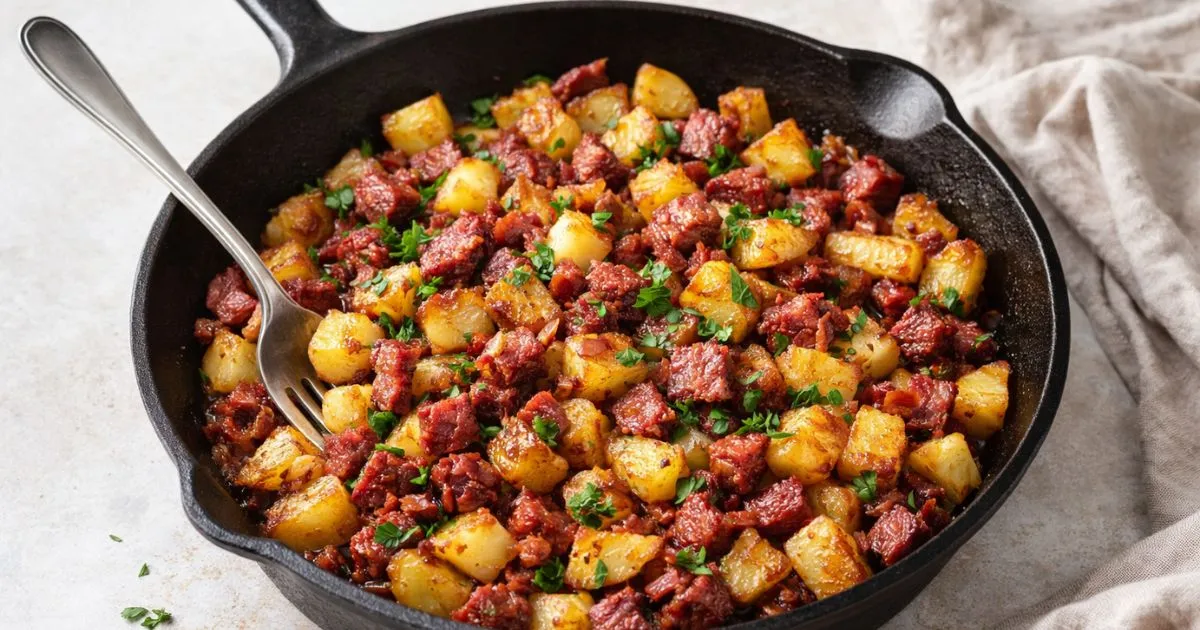
You know that warm, simple meal that feels like a hug on a busy morning? This is it: a skillet dish made for mornings or for those “breakfast-for-dinner” nights when comfort wins. You’ll learn how to get tender potatoes with a golden crust and meat browned into craggy edges instead of a soft mash.
The method is straightforward: parboil → dry → fry → press → flip. That sequence is why the pan gives you crisp instead of steam. Use leftover meat or pantry-friendly canned meat, and taste as you go so it never turns out too salty.
In this post you’ll find ingredient options, the best skillet choices, clear stovetop timing, tips for crispiness, egg pairings, and storage and freezing notes. Measurements are in cups and tablespoons and written for a standard U.S. home stovetop and a large skillet.

Key Takeaways
- Aim for tender potato centers with a golden, crispy crust.
- Follow parboil → dry → fry → press → flip for best texture.
- Use leftover or canned meat; adjust salt to taste.
- This works for breakfast or dinner and pairs well with eggs.
- The post includes skillet choices, variations, and storage tips.
Why you’ll love this crispy corned beef hash for breakfast or dinner
Transform your post-holiday meat into a golden, crisp skillet dish that’s ready in under an hour.
Perfect for leftovers after St. Patrick’s Day: When you have leftover corned beef from st. patrick day meals, this is the go-to plan. You turn yesterday’s brisket into a full plate by adding potatoes and onions in one skillet.
A classic way to use leftover corned beef after St. Patrick’s Day
The method is fast and practical. Parboil, dry, and fry—then press to build a crust. Total time is about 30–45 minutes, including parboiling.
This dish works as a hearty breakfast with eggs or a simple weeknight dinner when you want comfort without extra sides. It uses grocery staples so you don’t need specialty ingredients.
Homemade texture vs. canned hash
Homemade wins for texture: You control potato cube size and the cut of corned beef pieces. That gives identifiable chunks and real crisp edges when fried.
Canned versions cook softer because they’re more finely processed. Still, canned corned beef can make a good hash if you manage salt and focus on browning: use a hot pan, don’t crowd it, and press into a single layer.
- One-pan conversion of leftovers into a meal
- Flexible for breakfast or dinner
- Chunky homemade texture outshines canned
- Works with pantry staples and 30–45 minute prep
Ingredients for homemade corned beef hash
Grab potatoes, an onion, fat, and cooked meat—those few items make a full, crispy skillet.
Core ingredients with simple measurements
- Potatoes: about 4 cups diced potatoes (1/2-inch cubes).
- Cooked meat: ~4 cups chopped cooked corned or about 1/2 lb leftover brisket or other cooked beef.
- Onion: 1 medium, diced.
- Fat: 2 tablespoons butter and 1 tablespoon olive oil (or all oil).
- Seasonings: 1 teaspoon salt (adjust), 1/2 teaspoon black pepper, 1/2 teaspoon garlic powder, 1/2 teaspoon onion powder.
- Optional: 1–2 teaspoons Worcestershire sauce and a pinch of cayenne or crushed red pepper for heat.
Pick the best potatoes
Use russets if you want aggressive crisping. They brown well but can get fluffy if overboiled.
Yukon Gold or red potatoes hold shape. They give firmer cubes that stay intact while frying.
Notes on the meat and salt
Leftover or canned cooked corned can be salty. Season gradually and taste at the end.
Quick tip: if your leftovers are very salty, skip added salt and add a splash of Worcestershire sauce for depth instead.
Kitchen tools that help you get crispy edges
The right pan and turner change the outcome more than fancy ingredients. Use stable, even heat so the potatoes and meat brown instead of steam. That is the simplest way to build a crust.
Best skillet choices
Choose between cast iron, nonstick, or stainless
- Well-seasoned cast iron: gives the deepest browning and a lasting crust. Preheat the pan, then add your fat so it sizzles on contact.
- Heavy nonstick: good for smaller batches and easier flipping when you’re less confident with sticking.
- Heavy-bottom stainless: preheat until a few water drops “dance,” then add oil. That test lowers sticking and improves browning.
Spatula tips for pressing and flipping
Use a wide, stiff spatula to press the mixture into an even layer. Press and leave it undisturbed for a few minutes before checking.
When the crust forms, scrape under it and flip in sections to avoid tearing. Expect to press and cook in 3–5 minute stretches to get deep color.
| Pan | Best for | Tip |
|---|---|---|
| Cast iron | Maximum browning | Preheat well; add fat once hot |
| Heavy nonstick | Easy flipping | Use moderate heat; avoid metal tools |
| Stainless steel | Even sear without sticking | Use the “water dances” preheat test |
Corned beef hash recipe instructions in a skillet
This step-by-step skillet guide helps you get tender centers and a strong crust in about 40 minutes for roughly 4 servings.
Yield: about 4 servings. Total time: 35–45 minutes.
Ingredients: 4 cups diced potatoes (1/2-inch), 1 medium diced onion, 2 tablespoons butter, 1 tablespoon oil, 3 cups chopped cooked corned beef, 1 teaspoon salt (adjust), 1/2 teaspoon pepper, 1/2 teaspoon garlic powder, 1/2 teaspoon onion powder, optional 1–2 teaspoons Worcestershire sauce.
- Dice potatoes evenly and parboil in salted water until just tender, about 5–10 minutes. Drain thoroughly.
- Spread drained potatoes on a paper towel–lined sheet pan. Let steam evaporate and cool until tacky-dry.
- Heat 1 tablespoon butter + oil in a large skillet over medium heat. Sauté the diced onion until translucent, 2–3 minutes.
- Turn heat to medium-high. Add potatoes in a single layer and brown, stirring only occasionally so cubes develop golden faces.
- Mix in chopped cooked corned beef, pepper, garlic powder, and onion powder. Taste before adding salt; add Worcestershire if using.
- Press the mixture into an even layer with a wide spatula. Let cook undisturbed 3–5 minutes until deep golden at the edges.
- Scrape and flip the hash in sections. Add remaining butter or oil if the pan looks dry, press again, and repeat 1–2 times until browned to your liking.
- Serve hot. Garnish with parsley and pair with eggs or toast for a complete meal.
Tips for getting corned beef hash extra crispy
Crisping your skillet hash comes down to controlling moisture and using steady, hot contact with the pan.
Start hot: Preheat the skillet, then add fat. Wait until the butter or oil shimmers so potatoes begin frying instead of soaking. If you don’t see browning in a few minutes, the heat is too low or the potatoes are still damp.
Don’t crowd the pan: Work in batches when needed. Overcrowding traps steam and keeps potatoes soft. Spacing lets moisture evaporate so surfaces brown.
Let it sit: Press the mix into an even layer and leave it undisturbed for several minutes. That hands-off time builds the golden crust that tastes like diner-style beef hash.
Add fat in stages: When the pan looks dry, add a bit more butter or oil. Fresh fat improves contact and browning. It also prevents scorching during long cooks.
| Action | Why it helps | Timing cue |
|---|---|---|
| Preheat pan then add fat | Prevents potatoes from absorbing grease | Heat until fat shimmers (30–60 seconds) |
| Cook in single layer | Allows moisture to escape and surfaces to brown | 3–5 minutes per side for crust |
| Shred vs. dice meat | Shredded creates more browned edges; diced gives chunky bites | Shred for texture; dice for chew |
Variations you can make with eggs, potatoes, and leftovers
A few simple twists—egg styles, potato shortcuts, and add-ins—give you many quick weekday options.
Classic diner plate: serve the skillet with eggs fried, poached, or scrambled on top. Fried eggs keep yolks runny for richness; poached eggs add a delicate finish; scrambled eggs fold into the mix for a softer bite.
Cook flow and the bird’s nest method
For crisp results, finish the hash first, then cook eggs separately in a small pan. That prevents steam from softening the crust and lets you time yolks perfectly.
To make skillet “bird’s nest” eggs, press small wells into the crisped surface, crack an egg into each well, cover the pan, and cook until whites set. This takes just a few minutes and looks homey on a breakfast plate.

Potato shortcuts and add-ins
Frozen diced potatoes or frozen hash brown potatoes work if you thaw and pat them very dry. That stops steaming and keeps the surface crisp.
Sauté bell peppers with the onions for color and sweetness. Finish with hot sauce or a pinch of cayenne for controlled heat. Chop parsley and sprinkle at the end to brighten the plate without adding moisture.
| Swap | Why it works | Quick tip |
|---|---|---|
| Fried/poached/scrambled eggs | Different textures and richness | Cook eggs separately for max crisp |
| Frozen diced potatoes | Saves prep time | Thaw completely; pat dry before frying |
| Bell peppers & hot sauce | Adds color and spice | Sauté with onions; add sauce at end |
| Leftover meat or roasted vegetables | Makes use of leftovers without waste | Mix in small, dry pieces to avoid wetness |
Storage and reheating tips for leftover corned beef hash
Good storage makes the difference between soggy leftovers and a crisp reheated skillet meal.
Fridge timeline: Cool the pan mix to room temperature, then pack it into an airtight container. Store in the refrigerator for 3–4 days; some kitchens keep it up to 5 days, but quality drops after that.
Keep eggs separate. Store any cooked eggs on the side. Eggs become rubbery and release moisture, which makes the potatoes soggy when stored together.
Best reheating for crispness: Re-fry in a hot skillet with a thin film of oil or butter. Press into a single layer and fry a few minutes per side until hot and crisp. Working in smaller batches helps the pan stay hot so moisture can evaporate instead of steaming the pieces.
Microwave option: The microwave heats quickly but softens the crust. If you must use it, warm briefly and then finish in the skillet for a few minutes to re-crisp.
Freezing and thawing: Portion cooled portions, pack airtight, and freeze for up to 2–3 months. Thaw overnight in the fridge before reheating to keep texture consistent.
| Step | Why it matters | Timing |
|---|---|---|
| Cool and pack airtight | Prevents condensation and bacterial growth | Within 2 hours of cooking |
| Re-fry in skillet | Restores crust and releases moisture | 3–5 minutes per side |
| Freeze in portions | Makes thawing and reheating faster | Store 2–3 months |
| Store eggs separately | Prevents soggy potatoes and texture loss | Keep refrigerated 3–4 days |
Troubleshooting and quick answers while you cook
If your pan, potatoes, or meat aren’t cooperating, here are clear, quick actions you can take right away.
What is corned beef and why it’s called “corned”
Corned beef is brisket cured in a salty brine. The term “corned” refers to the coarse salt “corns” used in curing, not the vegetable.
Can you use canned corned beef, and how to adjust salt?
Yes. Canned corned beef is usually salt-forward, so start with no added salt. Taste near the end and add salt sparingly. Rely on pepper, aromatics, or a splash of Worcestershire for depth.

Sticking or tearing when you flip
Preheat the skillet well and add enough fat so the mix sizzles. Press into a single layer and leave it undisturbed until a crust forms. Flip in sections with a wide spatula.
Why potatoes turn mushy and how to fix it
Mushy potatoes come from over-parboiling, small cuts, or not drying. Parboil just until barely tender, cool on a towel-lined pan, and pat dry before frying.
Using other leftover meats
You can use leftover roast beef, turkey, or pork. Chop small, dry pieces and season with pepper and Worcestershire to mimic the savory profile of brisket.
| Problem | Likely cause | Quick fix | When to use |
|---|---|---|---|
| Sticks or tears | Pan not hot or too little fat | Preheat, add fat, press and wait for crust | Before first flip |
| Pale, soft browning | Too low heat or crowding | Raise heat, cook thinner batches | During frying stage |
| Mushy potatoes | Over-parboiled or not dried | Parboil briefly; dry on towel-lined tray | Prep before frying |
| Too salty | Canned meat or salty leftovers | Skip added salt; use pepper and Worcestershire | Season at end |
Conclusion
A short recap will help you remember which actions produce a golden crust and tender centers in your pan.
Core method: parboil, dry, brown potatoes, add corned beef, press to form a crust, flip and repeat until crisp.
Crispness levers: keep potatoes dry, use a hot skillet, cook in a single layer, and resist stirring too often. Add fat in stages if the pan looks dry.
Make it yours: choose diced or shredded beef, tweak seasonings, and top with eggs for a full breakfast plate.
FAQs
1. Can you make corned beef hash with canned corned beef? Yes—drain well, brown patiently, and cut back on added salt.
2. What are the best potatoes for corned beef hash? Yukon Gold or red hold shape; russets crisp strongly but must be parboiled and dried carefully.
3. Do you have to boil the potatoes first? Parboiling speeds cook time and helps crisp; skipping it means longer frying and more stirring.
4. Why won’t my hash get crispy? Likely causes: wet potatoes, overcrowded pan, low heat, or stirring too often. Dry, batch-cook, and let it sit.
5. What’s the best way to reheat corned beef hash? Re-fry in a hot skillet with a bit of oil or butter, press into a layer until crisp; store eggs separately.
FAQ
How long will leftover corned beef hash keep in the fridge?
Store cooked hash in an airtight container for up to 3–4 days. If you added eggs, keep them separate and use within 2 days for best safety and texture.
Can I use canned corned beef instead of leftover cooked brisket?
Yes. Canned meat works—break it into chunks and taste before seasoning. It’s often saltier, so reduce added salt and adjust Worcestershire or pepper to balance flavors.
Which potatoes give the best texture: russet, Yukon Gold, or red?
Russets crisp best because they’re starchy, Yukon Golds give creamy centers with crisp edges, and reds hold their shape for a chunkier bite. Parboil and cool to avoid mushiness.
How do I prevent the potatoes from turning mushy?
Dice evenly, parboil just until tender, drain thoroughly, and let the pieces dry and cool. Fry in a hot skillet without overcrowding so moisture can evaporate and you get golden edges.
What skillet should I use to get a good crust?
Use a well-seasoned cast-iron pan for top crust, a heavy nonstick for easy flipping, or stainless steel for strong browning—just make sure it holds high heat evenly.
How do I stop the hash from sticking or tearing when I flip it?
Let the bottom brown undisturbed until a crust forms, then slide a spatula under the whole section and flip in sections if needed. Add a little extra oil or butter if the pan looks dry.
Should I dice or shred the cooked meat for the best texture?
Dicing gives meaty bites; shredding creates craggy edges that brown more. Choose based on whether you prefer larger chunks or lots of crispy fragments throughout.
What’s the easiest way to reheat leftovers and keep them crispy?
Reheat in a hot skillet with a splash of oil over medium-high heat. Press gently to re-form the crust and flip once. Microwaving will warm quickly but won’t restore crispness.
Can I freeze the cooked hash, and how do I thaw it without losing texture?
Freeze in a shallow, airtight container for up to 2 months. Thaw overnight in the fridge, then re-fry in a hot pan to revive the crisp edges. Avoid refreezing after reheating.
How should I season if I want a simple, classic flavor?
Keep it basic with salt, black pepper, and a splash of Worcestershire. Add a pinch of garlic or onion powder if you like more aroma, and finish with chopped parsley for brightness.
Can I add peppers or onions and still get a crispy result?
Yes—sauté onions and peppers first until they’ve softened and some moisture evaporates, then add the potatoes and meat. Cook long enough to let excess moisture release before pressing for a crust.
What’s the best way to cook eggs on top of the skillet hash?
For fried eggs, make small wells in the hash and crack eggs into them, cover until whites set. For “bird’s nest” eggs, shape a shallow ring and cook until desired doneness. Poached or scrambled also work well as a topper.
Can I use frozen diced potatoes or pre-shredded potatoes?
Yes—thaw fully and pat very dry to remove excess water. Partially frozen potatoes can steam instead of brown, so drying is essential before frying.
How long does it take to make a skillet hash from start to finish?
Expect about 30–40 minutes: 10–15 minutes to prep and parboil potatoes, then 15–25 minutes to fry, brown, and finish with meat and seasonings, depending on your heat and pan size.
Can I substitute other leftover meats like turkey, pork, or roast beef?
Absolutely. Use the same method—dice or shred the meat, taste for salt, and adjust seasonings. Darker meats like roast beef add rich flavor and crisp easily when chopped small.
What do people mean when they call it “corned” meat?
The term refers to large grains of salt—historically called “corns”—used to cure the brisket. The result is a savory, slightly tangy cured beef that pairs well with potatoes and spices.