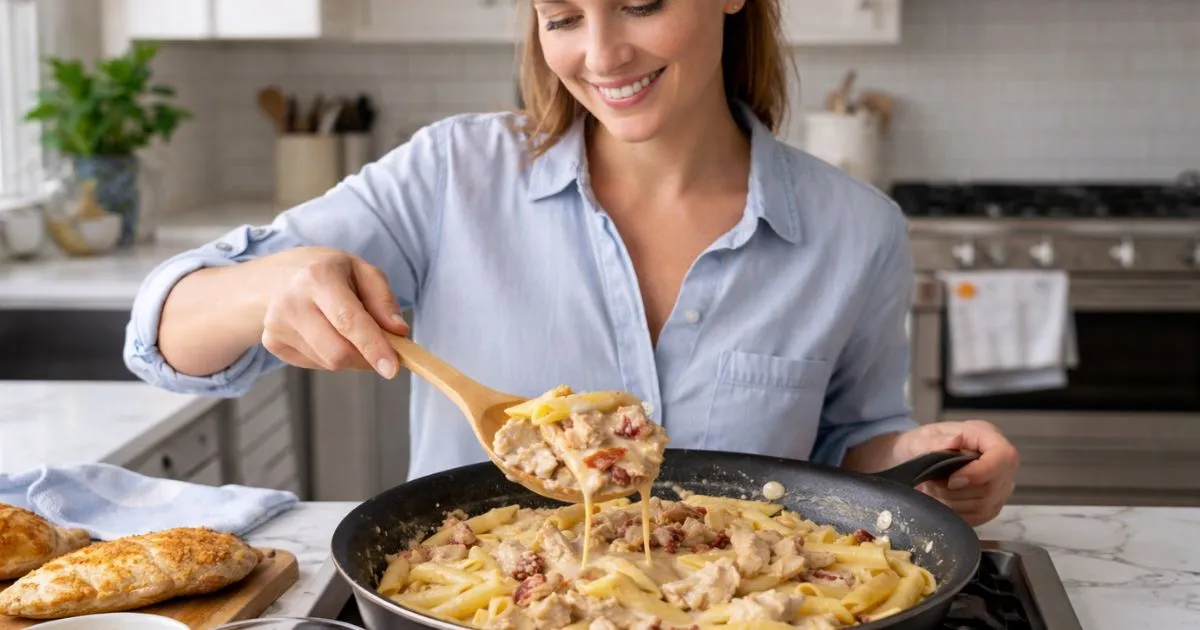
Creamy Chicken Carbonara Recipe – Easy 30-Minute Dinner
Table of Contents
This chicken carbonara recipe is perfect for busy weeknights when you want a creamy, satisfying dinner fast.
Looking for a creamy, comforting pasta dinner that comes together fast? This chicken carbonara version turns eggs, grated cheese, black pepper, and starchy pasta water into a glossy, homemade creamy sauce without a jar. It’s built from simple grocery staples and straightforward steps you can follow tonight.
Why it works for beginners: you cook pasta in one pot, render bacon in a skillet, and sear chicken separately. Then you whisk eggs and cheese in a bowl so the mixture stays smooth and never scrambles. Prep the protein and grate the parmesan first to save time.
You’ll be ready in under 30 minutes when you reserve a cup of pasta water and time the steps. The flavor mixes salty bacon, savory chicken, a peppery bite, and rich sauce that feels indulgent but uses a short list of ingredients. Use spaghetti, linguine, or short pasta and add a splash of heavy cream only if you want extra richness.

Key Takeaways
- This is a beginner-friendly meal you can make in about 30 minutes.
- The sauce relies on eggs, cheese, and starchy water for a silky finish.
- Render bacon and sear protein first to keep timing tight and cleanup minimal.
- Choose your pasta shape and add a touch of heavy cream if desired.
- One skillet plus one pot keeps this a quick, weeknight-friendly dish.
What Chicken Carbonara Is and Why You Can Make It at Home
Think of carbonara as an emulsion, where heat and motion turn eggs and grated cheese into a clingy, glossy sauce. You’re not making a cream sauce; you’re using eggs, hard cheese like Parmesan or Pecorino Romano, freshly ground black pepper, and a splash of starchy pasta water to bind everything together.
Classic technique made simple
Whisk eggs with grated cheese and pepper, then temper the mixture with hot pasta water. Toss off the heat so the egg thickens without scrambling. The result should be glossy, not watery.
How protein fits
Adding chicken turns the dish into a quick, protein-packed weeknight meal. Use sliced breast or leftover cooked meat. Mix it in at the end so it stays juicy.
Traditional vs. modern add-ins
- Traditional: guanciale or pancetta, eggs, Pecorino or Parmesan, and lots of pepper.
- Home-friendly swaps: bacon is common and adds smokiness when pancetta is hard to find.
- Optional: garlic and fresh herbs add aroma; heavy cream is nontraditional but a small splash can boost richness.
Ingredients and Kitchen Tools for Creamy Chicken Carbonara
A compact shopping list and a few smart tools make this dinner fast and reliable. Below is a clear ingredient list with helpful amounts and the tools that keep a 30-minute cook on track.

Core ingredients (for 4 servings)
- Chicken breast (boneless, skinless chicken) — about 12 oz cooked or 2 raw breasts.
- Pasta — 12–14 oz linguine or spaghetti, or 1 lb penne/rigatoni for chunkier bites.
- Eggs — 3 whole eggs + 1 yolk, or 2 yolks + 2 whole eggs for a richer texture.
- Parmesan or Pecorino Romano — ~3 oz (about 3/4 cup) grated; extra for serving.
- Bacon or pancetta — 4 thick strips or 5–6 regular slices.
Flavor builders and pantry basics
Garlic (minced), fresh parsley or basil, kosher salt (used sparingly), and plenty of freshly ground black pepper. Optional: 1/3 cup heavy cream if you want extra richness.
What to prep for a true 30-minute cook
Chop bacon or pancetta, mince garlic, grate cheese, and whisk your egg mixture in a heatproof bowl before you turn on the stove. Keep a measuring cup ready to reserve 1 cup of pasta water.
Tools that prevent common mistakes
- Large pot for boiling pasta.
- Skillet over medium heat to render pork and sear meat.
- Heatproof bowl and tongs for tossing off the heat.
- Thermometer to confirm chicken reaches 165°F.
| Item | Amount | Why it matters | Swap option |
|---|---|---|---|
| Pasta | 12–14 oz or 1 lb | Starch in water helps the sauce emulsify | Spaghetti, linguine, bucatini, penne |
| Eggs | 3–4 (or yolk mix) | Creates the glossy egg mixture for sauce | Extra yolk for richness |
| Cheese | 3 oz (¾ cup) grated | Salty, savory binder for sauce | Parmesan + Pecorino blend |
| Bacon / Pancetta | 4 strips / 5–6 slices | Provides rendered fat and savory depth | Smoked bacon or pancetta |
Chicken Carbonara Recipe: Step-by-Step Method for a Creamy Sauce
Start by bringing a large pot of salted water to a rolling boil so timing lines up with the rest of the steps. While the water heats, you’ll render pork and prep the egg mixture so everything finishes together.
Boil pasta and reserve pasta water
Cook pasta until just al dente, then reserve 1/2 to 1 cup of starchy pasta water before draining. That cup is your insurance if the sauce tightens when you toss.
Render bacon or pancetta
In a skillet over medium heat, cook bacon or pancetta low and slow until the fat renders, about 8–10 minutes. Remove to a paper towel and leave 1–2 tablespoons of fat in the pan.
Sear the chicken
Sear chicken strips in the rendered fat until an instant-read thermometer reads 165°F. Rest briefly, then slice or cube to keep bites juicy.
Whisk and temper the egg mixture
In a heatproof bowl whisk eggs or yolks with finely grated parmesan or Pecorino Romano and plenty of black pepper. Add a small splash of hot pasta water to warm the egg mixture, then toss with pasta off the heat.
Finish and serve
Toss vigorously until the sauce is glossy. Add reserved pasta water as needed, fold in bacon and chicken, then top with extra cheese, chopped parsley, and a final crack of pepper. Serve immediately on warm plates for best texture.
Pro Tips, Easy Variations, and Storage for Chicken Carbonara
A few simple habits in the final minutes will keep your sauce silky every time. Cool the skillet or pan for 2–3 minutes after searing so the eggs thicken gently when you toss.

Keep the sauce glossy
Start with 1/4 cup of pasta water in the bowl and add up to a cup as needed. The right glossy sauce will coat each strand or tube with no pooling liquid.
Troubleshooting quick fixes
- Dry pasta: add warm pasta water and toss hard for 30 seconds.
- Too salty: add extra pasta, a splash of water, or more chicken to balance.
- Curdled eggs: cool the pan next time, temper eggs with hot water, and work off-heat.
- Bland sauce: more black pepper and an extra sprinkle of cheese brightens it up.
Variations and storage
Try the dish with bacon or pancetta, swap penne for easier scooping, or use spaghetti for a classic feel. If you use rotisserie or leftover chicken, warm it 30–60 seconds in the rendered fat so it stays juicy.
| Issue | Fix | When to use |
|---|---|---|
| Dry pasta | Add 1–3 tbsp warm pasta water and toss | After 30–60 seconds of tossing |
| Curdled eggs | Loosen with water and toss off-heat; cool pan next time | Immediate |
| Too salty | Add pasta or water, or more chicken | Before serving |
Storage: Eat fresh when possible. Store leftovers airtight up to 1 day and reheat low and slow with a splash of water or saved pasta water to restore the creamy sauce.
Conclusion
End with a few clear steps so you can nail this dish on your first try. Render bacon, sear the chicken, boil pasta, whisk eggs and cheese, then toss off heat with reserved pasta water until the sauce shows a glossy sheen.
Your creamy result comes from technique, not extra ingredients. Eggs, hard cheese, and starchy pasta water create the silky finish. If you prefer a richer version, a small splash of heavy cream is optional, but the classic method relies on tempering and gentle tossing.
Keep the pan cool, use a heatproof bowl, and add hot pasta water to temper the eggs so they don’t scramble. Use long noodles like spaghetti for a traditional feel or tubes like penne for easy bites with bacon and protein.
Serve immediately on warm plates, top with extra cheese and black pepper, and enjoy a fast, satisfying weeknight meal. Leftovers keep one day; reheat low and slow with a splash of water.
FAQ
What makes this creamy chicken pasta different from traditional carbonara?
Traditional carbonara uses eggs, hard cheese (Parmesan or Pecorino Romano), black pepper, and starchy pasta water to create a silky sauce. Adding cooked chicken and sometimes bacon or pancetta turns it into a heartier, protein-packed weeknight meal while keeping the same egg-and-cheese technique for richness.
Can you use leftover or rotisserie chicken instead of cooking fresh poultry?
Yes. Using rotisserie or leftover chicken saves time and prevents overcooking. Add it at the end, just to warm through, so the pieces stay moist and the sauce stays creamy.
Do you need heavy cream to get a silky sauce?
No. Authentic sauce relies on eggs, cheese, and hot pasta water for creaminess. If you prefer extra richness, a splash of heavy cream can help, but it’s optional and changes the classic texture.
How do you stop the eggs from scrambling when mixing the sauce?
Work off the heat and temper the eggs by adding a small amount of hot pasta water first, whisking quickly. Toss the pasta vigorously with the yolk-and-cheese mixture so residual heat thickens the sauce without curdling.
What pasta shape should you choose for the best texture?
Long shapes like spaghetti, linguine, or bucatini coat well with the sauce, while short shapes such as penne or rigatoni hold bits of bacon and chicken. Pick based on preference; all work if you reserve pasta water to adjust the sauce.
How much pasta water should you reserve and why?
Save about 1 cup of starchy cooking water. Start by adding a few tablespoons to the egg-and-cheese mix, then add more as needed. The starch helps emulsify the sauce and achieve a glossy, clingy consistency.
Is it better to use bacon or pancetta for the cured pork element?
Pancetta gives a more authentic Italian flavor and renders clean fat, while bacon adds smoky, salty notes. Both work; cook low and slow to render fat without burning, then set aside to mix back in at the end.
How do you ensure the cooked poultry stays juicy?
Sear breasts over medium heat until they reach 165°F on a thermometer, then rest them 5–10 minutes before slicing or cubing. Resting lets juices redistribute and keeps each bite tender.
What are quick flavor builders to add without complicating the process?
Freshly ground black pepper, minced garlic sautéed briefly in the rendered fat, and a sprinkle of chopped parsley or basil brighten the dish. A final grating of Parmesan adds texture and salt balance.
How should you store and reheat leftovers to keep the sauce creamy?
Store in an airtight container in the fridge up to 2–3 days. Reheat gently in a skillet over low heat with a splash of water or milk, tossing constantly until warmed to avoid curdling. Avoid high heat or microwave-only reheating.
My sauce looks dry or clumpy — how do I fix it?
Add small amounts of reserved pasta water or warm milk, stirring vigorously to smooth the sauce. If eggs have already scrambled, a splash of cream and steady whisking off-heat may help partially rescue the texture.
Can you make this dish in 30 minutes from start to finish?
Yes. Prep ingredients first: bring a large pot of salted water to a boil, measure cheese and eggs, and slice the poultry. Cook pasta and proteins in parallel, then combine and toss off-heat to finish within about 30 minutes.