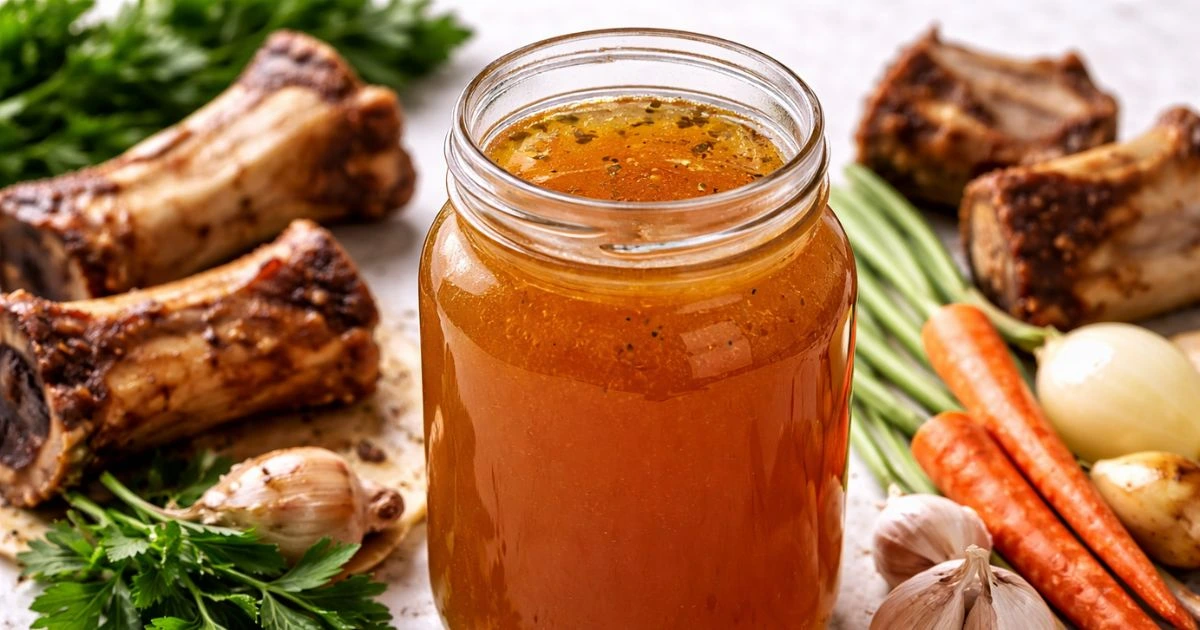
Delicious Beef Bone Broth Recipe
Table of Contents

Ever felt that warm comfort that makes a cold day better? That’s what homemade bone broth does. Making broth at home felt like a return to a simpler time. It’s nourishing and deeply satisfying.
This article will teach you a reliable, collagen-rich bone broth recipe. It uses an easy slow cooker method. You’ll learn about ingredients, equipment, and timing for a flavorful stock every time. I also provide stovetop and pressure-cooker notes for flexibility.
This guide is for home cooks in the United States. It’s for those who want nutritious, cost-effective, and sustainable cooking. You’ll get tips on roasting bones, extracting collagen, and using your broth in various ways.
By the end, you’ll make a slow cooker bone broth that’s gelatinous and savory. It’s perfect as a daily drink or a base for your favorite recipes. Enjoy the nourishment of homemade bone broth with our simple, slow cooker recipe.
Key Takeaways
- You will learn a step-by-step beef bone broth recipe suitable for slow cooker, stovetop, or pressure cooker.
- The guide focuses on a collagen-rich bone broth recipe to boost gelatin and mouthfeel.
- The method is budget-friendly and supports sustainable use of bones and scraps.
- Practical advice covers equipment, roasting and blanching bones, and extraction times.
- You’ll get storage, reheating, and recipe ideas to use homemade bone broth in everyday cooking.
Why You’ll Love This Homemade Bone Broth
Beef bones simmered for hours create a rich, nourishing liquid. It’s packed with minerals and amino acids. The slow cooking process extracts calcium, magnesium, and phosphorus from the bones.
Collagen breaks down into gelatin, adding to the broth’s health benefits. You get glycine and proline, which support digestion and joint comfort.
Drinking homemade bone broth feels more satisfying than regular stock. The gelatin gives it a smooth texture. This texture helps you feel full and supports gut health and joint mobility.
Health benefits and nourishment
Following a collagen-rich bone broth recipe boosts your intake of trace minerals and protein. The long simmer increases gelatin and delivers amino acids. These are linked to better sleep, digestion, and recovery.
Regularly using nutritious bone broth supports meal recovery and everyday wellness. It’s an easy way to add bioavailable nutrients to your meals.
Flavor and versatility in recipes
A traditional bone broth adds deep umami and roasted beef flavors. It’s perfect for sipping, making soups, and braising tougher cuts.
Use concentrated broth to enrich sauces, boost risottos, and add weight to mashed vegetables. A well-made homemade bone broth improves texture and balances flavors.
Cost savings and sustainability
Making broth from leftover roast bones stretches your food dollar. Buying bones at farmers’ markets or local butchers often costs less than prepared broths. It reduces waste too.
Batch-making and freezing portions cuts packaging waste and saves time. Full-use cooking turns discarded bones into a nutritious, economical staple for your kitchen.
| Benefit | What it Provides | How to Use |
|---|---|---|
| Nutrition | Calcium, magnesium, phosphorus, gelatin, glycine, proline | Drink warm, add to soups, use in sauces |
| Flavor | Deep umami, roasted beef richness, fuller mouthfeel | Braise meats, enhance risotto, thicken gravies |
| Economy | Uses leftover bones, lowers grocery costs | Batch and freeze portions; buy bones from local butchers |
| Sustainability | Reduces food waste and packaging | Make large batches, repurpose solids for compost |
Ingredients for a Collagen-Rich Beef Bone Broth
To make a rich, flavorful broth, you need the right bones and some aromatics. This section explains the best choices. Your beef bone broth recipe will have deep flavor and a gelatinous texture.
Best bones to use for collagen-rich results
Use marrow bones, knuckle bones, oxtail, neck bones, shank, and meaty soup bones. Knuckles and joints have more cartilage, which turns to gelatin when simmered long. Ask your local butcher for “soup bones” or marrow bones. Choose grass-fed or pasture-raised beef for cleaner flavor and better nutrients.
Vegetables, aromatics, and herbs to enhance flavor
Classic aromatics include onion, carrot, and celery. Add garlic, leeks, and parsnip for more depth. Bay leaves, whole peppercorns, thyme, and parsley stems enhance the flavor. Roasting bones and browning vegetables deepens the broth. Add coarse sea salt at the end to avoid over-salting.
Optional ingredients for added nutrients and taste
Use apple cider vinegar to extract minerals. Dried shiitake or porcini mushrooms add umami. Brown tomato paste for richer color and taste. For an Asian twist, try ginger and star anise. A little red wine adds depth. Use citrus peels sparingly to avoid bitterness.
Following a collagen-rich bone broth recipe or adapting it into a versatile beef stock is easy. Knowing the best bones and aromatics lets you customize the broth for soups, stews, and sipping cups.
Equipment You’ll Need for Slow Cooker Bone Broth
Getting the right tools makes making slow cooker bone broth easy and safe. You’ll save time and avoid mistakes with the right equipment. Here’s a quick guide to compare methods, a list of essential tools, and safe steps for bones and utensils.
Slow cooker vs. stovetop vs. pressure cooker
Choose a slow cooker for easy, low-and-slow cooking. Just set it and forget it for 12–24 hours. This method is perfect for busy people.
For more control, use a stovetop stockpot. You can skim off impurities and adjust the heat. It’s great for those who like a traditional beef stock recipe.
If you want fast results, try a pressure cooker like an Instant Pot. It cooks in 2–3 hours, making it ideal for quick flavor.
Essential tools: strainer, jars, ladles
Start with a big slow cooker or a heavy stockpot. Add a roasting pan for browning bones. Browning bones adds flavor to your broth.
Use a fine-mesh strainer or chinois for clear broth. Wrap cheesecloth around the strainer for even clearer broth. A large ladle and funnel make bottling easy.
Choose wide-mouth Mason jars from Ball or Kerr for storing. Make sure to leave enough headspace if you freeze them. Silicone freezer trays are great for portioning.
Don’t forget a kitchen thermometer, trimming knife, and sturdy tongs. These tools make your process safer and more efficient.
How to prepare bones and utensils for safety
Roast or blanch bones before simmering to remove impurities. Roasting adds depth, while blanching helps with stovetop batches.
Sanitize jars and utensils by boiling or running them through a dishwasher’s sanitize cycle. Use oven mitts and a stable tray when moving hot pots. Strain slowly to avoid splashes and burns.
Throw away any broth that smells off, has visible mold, or looks unusual. Follow USDA storage guidelines for keeping your homemade bone broth safe.
| Item | Purpose | Best for |
|---|---|---|
| Slow cooker (6–8 qt) | Low-and-slow extraction, unattended cooking | slow cooker bone broth, easy bone broth recipe |
| Heavy stockpot | Full control, easy skimming, large batches | beef stock recipe, traditional stovetop method |
| Pressure cooker / Instant Pot | Fast extraction, intense flavor in hours | pressure cooker bone broth |
| Roasting pan | Browning bones to deepen flavor | All methods, specially beef stock recipe |
| Fine-mesh strainer / chinois | Clarifies broth, removes solids | homemade bone broth clarity |
| Cheesecloth | Extra-fine filtering for clear stock | High-clarity beef stock recipe |
| Wide-mouth Mason jars (Ball, Kerr) | Safe storage, can be frozen with headspace | Long-term storage for homemade bone broth |
| Silicone freezer trays | Portioning single servings for quick use | Easy bone broth recipe meal prep |
| Ladle, funnel, tongs | Safe handling and bottling | All cooking methods |
| Kitchen thermometer & trimming knife | Temperature checks and bone prep | Food safety and prep accuracy |
Beef Bone Broth Recipe
This recipe makes about 6–8 quarts of rich, nourishing stock. You can use it as a base for soups, sauces, or a warm cup on its own. The steps below guide you through the ingredients, bone prep, and cooking times for a collagen-rich broth. It’s a traditional recipe that’s easy to follow.
Step-by-step ingredients and measurements
Here’s what you need for a typical batch:
- 4–6 pounds mixed beef bones (marrow, knuckle, shank)
- 2 carrots, halved
- 2 celery stalks
- 1 large onion, quartered
- 4 garlic cloves, smashed
- 2 tbsp apple cider vinegar
- 2 bay leaves
- 1 tbsp whole black peppercorns
- Handful of parsley stems
- 1–2 tbsp tomato paste (optional)
- 12–14 cups cold water
Add salt to taste after cooking. These amounts ensure a flavorful broth rich in collagen.
Preparing the bones: roasting and blanching tips
Roasting makes the bones brown and adds flavor. Spread them on a sheet pan and roast at 425°F for 30–45 minutes. This step is great for a deeper flavor.
Blanching makes the stock clearer. Boil the bones in cold water for 10 minutes, then discard the water. Rinse the bones and pot to remove scum before continuing.
You can do both methods. Blanch first to remove impurities, then roast briefly for browning. This mix gives you a clear and flavorful broth.
Setting times and temperatures for best extraction
Slow cooker: Set to low for 12–24 hours. Aim for about 18 hours for the best flavor and body.
Stovetop: Simmer gently for 12–24 hours. Keep the heat low and skim foam for clarity.
Pressure cooker (Instant Pot): Cook on high pressure for 2–3 hours, then let it release naturally. This method is faster for a rich broth.
| Method | Temperature/Setting | Time | Pros | Notes |
|---|---|---|---|---|
| Slow cooker | Low heat | 12–24 hours (18 hrs ideal) | Hands-off, stable low heat | Best for consistent gelatin and easy bone broth recipe |
| Stovetop | Gentle simmer | 12–24 hours | Traditional approach, deep flavor control | Requires occasional skimming to keep broth clear |
| Pressure cooker | High pressure | 2–3 hours | Fast, efficient extraction | Produces collagen-rich bone broth recipe in less time |
Keep the heat low and skim impurities for clear stock. Once cooled, strain and refrigerate. Use salt after tasting to avoid over-salting. This method gives you a versatile broth for many dishes.
Step-by-Step Cooking Guide for Slow Cooker Bone Broth
Follow a simple sequence to make rich, gelatinous bone broth in a slow cooker. Start with roasted or blanched beef bones. Add aromatics and use gentle heat for a long extraction. This makes the process easy, even for beginners.
Initial layering and adding aromatics
Put the roasted or blanched bones in the slow cooker so they sit evenly. Add rough-chopped onions, carrots, and celery on top and between bones to boost flavor. Tuck in garlic, bay leaves, peppercorns, and any herbs you like.
Pour cold water over the bones until they are covered, leaving 1–2 inches of headspace. Add 1–2 tablespoons of apple cider vinegar to help draw minerals from the bones. If you use tomato paste or dried mushrooms for extra umami, add them now so their flavors meld during the long cook.
Cooking schedule and how to skim impurities
Set the slow cooker to low and aim for 12–24 hours of cooking time. A typical target is 18 hours for a good balance of gelatin and flavor. If you need a quicker finish, 12 hours will still yield tasty broth; for maximum extraction, go toward 24 hours.
In the first one to two hours, foam and scum will rise to the surface. Remove this layer with a fine-mesh skimmer or a ladle. Repeat occasional skimming during the first part of the cook to keep the broth clear. If you use a stovetop method instead, maintain a gentle simmer and skim more often to prevent boiling agitation.
Finishing touches and resting the broth
When the cooking time ends, turn off the heat and let the bones steep for 30–60 minutes. This resting period helps the flavors settle and cool slightly before straining. Strain the liquid through a fine-mesh strainer lined with cheesecloth into a heatproof container.
Allow the broth to cool a bit, then refrigerate until the fat solidifies on top for easy removal. Taste and season with sea salt and a bright splash of apple cider vinegar or lemon to lift the flavors. This simple routine makes a reliable beef bone broth recipe and keeps this homemade bone broth an easy bone broth recipe you’ll return to.
Easy Bone Broth Recipe Variations
Start with a simple base and tweak it to suit meals and moods. An easy bone broth recipe is a great canvas for classic builds, herb-led twists, or a concentrated beef stock recipe for sauces. Below are three clear paths to try at home.

Traditional bone broth with classic aromatics
Use roasted marrow and knuckle bones for a gelatin-rich base. Add rough-chopped onion, carrot, and celery, plus bay leaf, whole peppercorns, and parsley stems. Keep seasoning minimal until the end.
Simmer gently for 12 to 24 hours to pull out collagen and deepen flavor. Strain carefully and cool so you can skim off excess fat if you like. This approach produces a true traditional bone broth with steady, savory depth.
Herb-forward and spiced variations
Try a herb-forward bone broth by adding rosemary and thyme during cooking for Mediterranean notes. For Asian-influenced broth, include star anise, fresh ginger, and scallion pieces.
For a smoky profile, toss in smoked paprika and a touch of cumin. Add whole spices early on, then stir in fresh herbs near the end to keep brightness intact. These swaps make the broth versatile for different cuisines.
Rich beef stock recipe version for sauces
Choose meatier bones such as neck and shank and roast them until deeply browned. Use the strained broth as a base and reduce it on the stovetop to concentrate flavor for pan sauces or demi-glace.
Add a splash of red wine early in the reduction for complexity. Finish the reduced stock with a knob of butter for sheen and silkiness. This method turns broth into a restaurant-quality beef stock recipe ideal for finishing meats and rich sauces.
How to Store and Reheat Your Bone Broth Safely
Keeping your bone broth fresh and tasty is easy. Cool it down fast, then put it in clean jars. Don’t forget to label them with the date. Follow simple steps for storing in the fridge or freezer to keep its flavor and gelatin.
When it’s time to eat, reheat it gently. This keeps the broth smooth and enjoyable.
Cooling and transferring to jars
Cool your broth quickly by dividing it into shallow containers. Or, place pots in an ice bath until it cools down. Strain it through a fine mesh and pour into Ball or Kerr mason jars using a funnel.
Leave 1–2 inches of space at the top if you plan to freeze. This allows for expansion. If you’re refrigerating, let the broth sit uncovered until it’s warm. Then, seal it tightly.
Refrigeration and freezing guidelines
Store jars upright in the fridge and use within 4–5 days. For longer storage, freeze in 1–2 cup portions. This makes thawing easier.
Use silicone ice cube trays or freezer-safe containers. Bone broth stays best for 3–6 months in the freezer. But it’s safe for much longer. Always label containers with the date to keep track of freshness.
Best ways to reheat without losing texture
Reheat bone broth slowly over low heat on the stovetop. Avoid boiling, as it can make the broth greasy. For frozen portions, thaw in the fridge overnight or in a warm water bath.
Once thawed, give the broth a quick whisk or stir. This helps restore its silky texture before serving.
Using Your Bone Broth in Everyday Cooking
Making a beef bone broth recipe at home gives you a versatile liquid. It enhances simple meals with deep flavor and natural collagen. Use it often to get the most from your batch.

Soups, stews, and braises that benefit most
Use your broth in soups like beef vegetable soup or French onion soup. It adds richness and body. For braises, like osso buco or slow-cooked chili, it improves the sauce’s texture.
Braised meats taste better when you use a beef stock recipe instead of water.
Boosting grains, sauces, and risottos with broth
Cook rice, quinoa, or farro in warm broth for extra flavor. Use beef stock recipe as a savory base for bowls.
Deglaze pans with a splash of warm broth for pan sauces. For risotto, add broth gradually while stirring. This makes it silky and creamy without cream.
Quick nourishing drinks and smoothies
Warm a cup of bone broth with lemon for a simple boost. Add it to smoothies or blended soups for extra protein and collagen.
Season quick drinks with black pepper and turmeric. Try a mug with miso and scallions. These tweaks make your homemade bone broth a fast, nourishing option.
Troubleshooting and Tips for a Perfect Broth
When your batch needs rescue, quick fixes save time and salvage flavor. Use these practical steps to handle common problems, boost body, and balance seasoning in your beef bone broth recipe.
What to do if your broth is cloudy or greasy
Cloudy bone broth often comes from a rolling boil, unblanched bones, or failing to skim impurities. To clarify a finished pot, strain the liquid through cheesecloth or a fine-mesh sieve. For tougher haze, cool the broth in the refrigerator so sediments settle, then decant the clear top and discard solids.
Grease is simple to handle. Chill the broth until the fat hardens, lift off the solid layer, and reheat gently. If you like mouthfeel, blend a few tablespoons of the removed fat with fresh, low-fat broth to recreate body without excess oil.
How to increase gelatin and body in weak broths
If gelatin in bone broth is lacking, plan changes for the next batch. Use more knuckle bones, joints, or marrow bones that carry cartilage and connective tissue. Adding chicken feet or pork trotters boosts collagen quickly if you accept mixed proteins.
Longer, low simmering extracts more collagen. Aim for 12 to 24 hours on a low heat setting. As a last-minute fix, stir in one tablespoon of unflavored gelatin powder per quart and bloom it first in cold water, then whisk into warm broth for immediate thickness.
Flavor corrections: balancing salt and acidity
Season at the end. Concentration during reduction raises saltiness, so add salt slowly and taste after the broth has cooled slightly. If the pot tastes flat, a splash of acid brightens flavors—apple cider vinegar, lemon juice, or a little red wine work well.
Too salty? Dilute with water or low-sodium broth and warm gently. Too weak? Reduce gently to concentrate flavor or roast extra aromatics—onions, carrots, and garlic—and add them to the pot for a richer profile.
| Problem | Immediate Fix | Prevention for Next Batch |
|---|---|---|
| Cloudy bone broth | Strain through cheesecloth; chill and decant | Blanch or roast bones; keep a low simmer and skim scum |
| Too greasy | Refrigerate, remove fat cap; blend small amount back for texture | Trim excess fat before cooking; use a fat separator |
| Weak body / low gelatin in bone broth | Add bloomed gelatin powder or simmer longer with joints | Use more knuckle joints, marrow bones, or chicken feet |
| Too salty | Dilute with water or unsalted broth; reheat gently | Season at the end; account for reduction |
| Flat or dull flavor | Add acid (vinegar, lemon) or roasted aromatics | Roast bones and vegetables; finish with a touch of acid |
Conclusion
You now know how to make a delicious beef bone broth at home. Just follow the list of ingredients and the cooking schedule. You can also adjust the steps for stovetop or pressure-cooker methods if needed.
This bone broth is packed with protein, minerals, and flavor. You can use it in soups, sauces, grains, and even quick drinks. Making it in a slow cooker is easy and requires little effort. You can also customize it by adding herbs, roasting bones, or simmering it longer.
Start by making your first batch of bone broth. Then, freeze it in labeled portions for easy access during the week. Always follow food safety guidelines when cooling, storing, and reheating. If you have questions, check the USDA food-safety guidelines or ask your local butcher about bone sourcing and storage.
FAQ
What is the easiest beef bone broth recipe for a slow cooker?
Start by placing 4–6 pounds of mixed beef bones in your slow cooker. Add 2 carrots, 2 celery stalks, and 1 large onion. Include 4 smashed garlic cloves, 2 tbsp apple cider vinegar, and 2 bay leaves. Don’t forget 1 tbsp whole peppercorns, a handful of parsley stems, and 1–2 tbsp tomato paste (optional). Use 12–14 cups of cold water. Cook on LOW for 12–24 hours, aiming for 18 hours.Strain the broth, cool it, and refrigerate. Let the fat solidify before seasoning. This makes a rich, flavorful broth perfect for sipping or cooking.
Which bones give the most collagen-rich results?
Knuckle bones, marrow bones, oxtail, neck bones, shank, and meaty soup bones are best for collagen. Knuckles and joints have lots of cartilage, which turns into gelatin during simmering. Ask your butcher for “soup bones” or marrow bones, preferably grass-fed or pasture-raised.
Should I roast or blanch bones before making broth?
Roasting at 425°F for 30–45 minutes deepens flavor and color. It’s recommended for richer broth. Blanching (boil 10 minutes, discard water, rinse bones) removes scum and makes the broth clearer. You can do both: blanch to remove impurities, then roast briefly to enhance color and umami.
How long should I cook beef bone broth in a slow cooker, stovetop, or pressure cooker?
Cook in a slow cooker on LOW for 12–24 hours, aiming for 18 hours. On the stovetop, simmer gently for 12–24 hours, keeping below a boil and skimming as needed. In a pressure cooker or Instant Pot, cook on high pressure for 2–3 hours with a natural release. Longer, low-temperature cooking yields more gelatin and minerals.
Do I add salt during cooking or after?
Add salt at the end of cooking. Long cooking concentrates flavors, so early seasoning can lead to over-salting. After chilling, season with coarse sea salt and adjust with apple cider vinegar or lemon for brightness.
How do I skim impurities and prevent cloudiness?
Start by blanching or roasting bones to reduce scum. During the first few hours, skim foam and impurities with a fine-mesh skimmer or ladle. Keep the simmer gentle—avoid a hard boil—and strain the finished broth through a fine-mesh strainer lined with cheesecloth for extra clarity.
How can I increase gelatin and body if my broth is weak?
Use more knuckle and joint bones next time, and include cartilage-rich pieces like oxtail or feet. Simmer longer (up to 24 hours). You can also add a small amount of culinary gelatin powder as a last resort. Ensuring bones have connective tissue and using apple cider vinegar to help extract minerals will improve body.
What optional ingredients enhance flavor and nutrients?
Optional additions include apple cider vinegar (helps extract minerals), dried shiitake or porcini for umami, tomato paste for color and depth, ginger and star anise for an Asian twist, or a splash of red wine for richness. Use citrus peels sparingly to brighten flavors. Add strong fresh herbs near the end to preserve brightness.
How should I cool, store, and freeze bone broth safely?
Cool quickly by dividing into shallow containers or using an ice bath, then strain into clean jars. Refrigerate. Refrigerate up to 4–5 days; freeze for 3–6 months for best quality. Leave 1–2 inches headspace in jars for expansion. Use silicone trays or 1–2 cup portions for easy thawing. Label jars with the date.
What’s the best way to reheat broth without losing texture?
Reheat gently over low heat on the stovetop—avoid boiling to preserve gelatin structure and mouthfeel. Thaw frozen portions overnight in the refrigerator or warm a sealed jar in a warm water bath. Whisk briefly if texture separates to restore a silky finish.
Can I use beef bone broth for sauces and reductions?
Yes. To make a rich beef stock for sauces, use more meaty bones (neck, shank), roast them well, strain the broth, then reduce on the stovetop to concentrate flavor. Finish reductions with butter or a splash of wine for gloss and depth when making pan sauces or demi-glace.
My broth is greasy—how do I fix it?
Refrigerate the strained broth until the fat solidifies on top, then remove it with a spoon. For cloudy or greasy batches, strain through cheesecloth. For future batches, roast or blanch bones and keep the simmer gentle while skimming regularly to reduce emulsified fat.
Are there quick nourishing ways to drink bone broth?
Heat a cup and season with a pinch of sea salt, black pepper, and a squeeze of lemon or apple cider vinegar for brightness. Add miso and scallions, or stir in turmeric and black pepper for an anti-inflammatory mug. You can also blend a small amount into smoothies for added collagen and savory depth if you like.
How do I use leftover bones or scraps sustainably?
Save roast carcasses, marrow bones, and trimmings in the freezer until you have enough for a batch. Buying bones from local butchers, farmers’ markets, or grocers like Whole Foods and Kroger cuts waste and saves money compared with single-use packaged broths. Batch-make, portion, and freeze to minimize packaging and maximize utility.
Is beef bone broth nutritious—what nutrients does it provide?
Long-simmered beef bone broth concentrates minerals such as calcium, magnesium, and phosphorus, plus collagen-derived gelatin and amino acids like glycine and proline. Gelatin contributes to mouthfeel and may support gut comfort and joint health. Nutrient levels vary by bones, cooking time, and added ingredients.
Can I make a clear broth suitable for delicate soups?
Yes. Blanch bones first to remove surface impurities, keep a gentle simmer, skim frequently, and strain through cheesecloth. Avoid vigorous boiling and heavy roasting if you want a lighter, clearer broth suitable for delicate consommés and clear soups.
What are safe signs to discard broth?
Discard broth if it smells sour, has an off odor, shows visible mold, or has been stored in the refrigerator beyond 4–5 days. When reheating, if the broth has an unusual color or texture that doesn’t resolve with gentle stirring, err on the side of safety and discard. Follow USDA food-safety recommendations when in doubt.
Love This Recipe? Leave a Review!
There are no reviews yet. Be the first one to write one.